



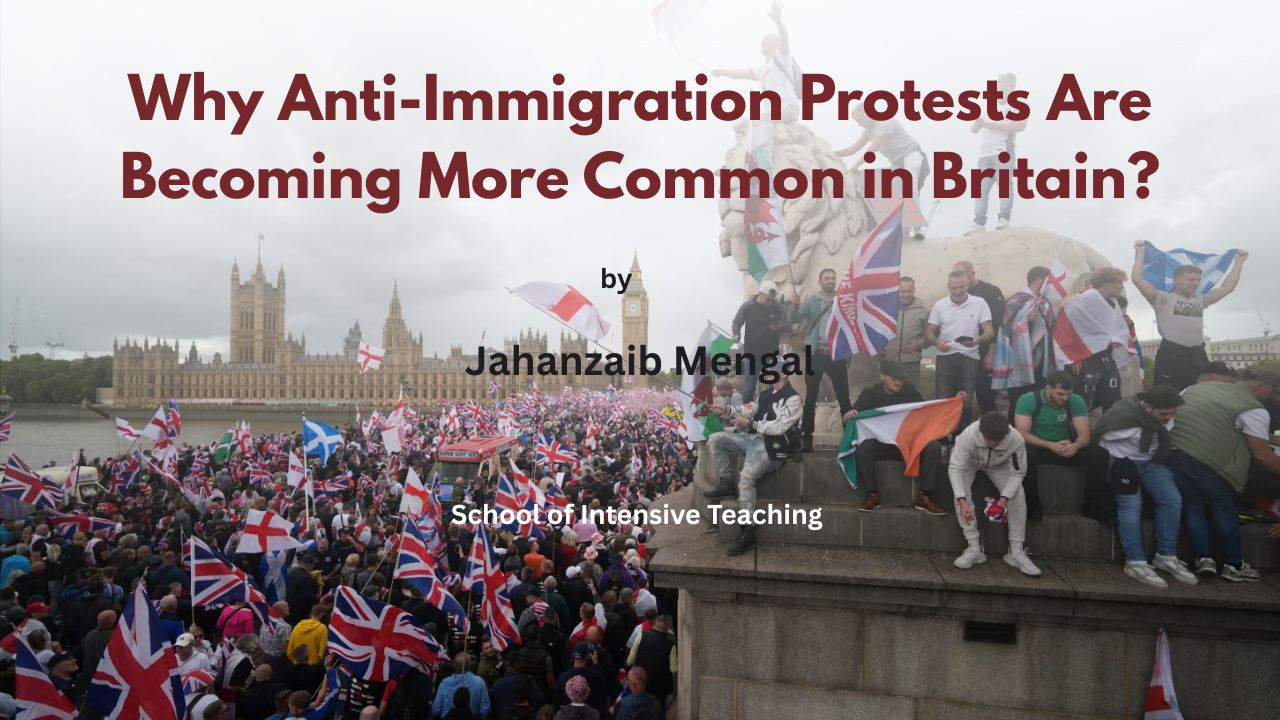
What makes a crowd of 15,000 chant the slogan of “Stop the boats” in the heart of London? Is it fear, anger, or the echo of a nation struggling to hold on to a sense of itself? The answer is harsher, the sense of losing their identity. This week, London witnessed a wave of anti-immigration protests—unearthing the underlying tensions in Britain. In central London, demonstrators united under the slogan of “Unite the Kingdom”, a call showing the polarizing debate of immigration. Organized and amplified by the far-right activist Tommy Robinson, the protesters divulged the deeper anxieties over migration and Britain’s long-standing relationship with newcomers. Chanting slogans and clashing with the police, protesters demanded tighter regulations and an end to illegal immigration policies of the country. Why Britain is protesting over immigrations and how is it shaping Britain today?
Globalization and the Search for Identity:
To many Britons, climate change is a looming threat; however, losing their identity is the foremost and immediate. And globalization has , no doubt, furthered this fear to its utmost and created anxiety about their identity.
Centuries ago, the Industrial Revolution set Britain on a path that demanded global connections: colonies supplied raw materials, and workers from abroad came to the shores of Britain and fuelled the wheels of industry. Britain became a beacon of modernity—attracting migrants across the world.
After the culmination of the Second World War, openness of borders expanded further. The creation of European Coal and Steel Community, later on, resulting in European Union: with lowered borders and free movement, brought millions of people in Britian. Britain joined the European Economic Community (EEC) in 1973, reaping the economic benefits of its openness and open borders with other 27 member states. Thus, only existing it in 2020 through Brexit when anti-immigration roars were popular.
Today, Britain’s demographics reflects this openness. South Asian communities thrive in many cities, London’s Mayor Sadiq Khan is a Pakistani origin, and even the recent Prime Minister, Rishi Sunak, was of Indian origin—whose parents have once landed as migrants. Yet, for many protests in London, these symbols of diversity are also symbols of loss and symbols of vulnerability. To them, immigration is not only confined to numbers, but its is about identity, belonging, and the fear of becoming strangers in their own land.
Brexit and the Unending Tide:
Brexit—the Untied Kingdom’s unceremonious exit from the European Union in 2020—was more than a political rupture; it was a cultural reckoning. Many Britons can not answer the question properly why they left the European Union. The underlying reason is migration and the flooding of their borders. Brexit was a watershed moment in European history and it can best be described as a locked door that promised safety, but left many still peering anxiously through the keyhole.
“Take back control,” slogans became popular during Brexit. When Britain was a part of the Union, roughly by 2016, 3 million EU nationals were living in Britian. This was a massive blow to the Britons who once cherished open borders. From the moment of Brexit, far-right parties and anti-immigrant sentiments sowed their seeds in Britain—making more fame and talking more openly. The campaign rhetoric often painted immigration as changing Britain “too fast,” when number of mosques grew and bearded men roamed the streets of London. This a cultural loss to the Britons and from there anti-immigrant sentiments became ingrained in British politics and psyche. Till today, Britain is reeling from this cultural loss and far-right activist like Tommy Robinson have gained relevancy.
Economic Frustration and the Scapegoating:
Behind the rhetorics in central London and in the placards, a message lay large: economic frustration turned into scapegoating. Over the years Britain’s economy has taken a nose dive and resulted in job loss, rising house expenditure, and inflation. For these particular reasons, Britons once started to blame the rules of European Union and its openness. Once done with the business of EU, they have now diverted the tide towards ‘outsiders’.
Immigrants are often considered as peer-competitors for jobs, hospital beds, and housing. This is pure scapegoating for systemic failure—as it is done here to wrap failures under the guise of foreign intervention, even floods and fog are not left in the irony. The reality in Britain is that many of its economic wheels are powered by these migrant workers ranging from agriculture to health care. Still, in today’s Britain, narratives like “immigrants are taking what is ours” taking political currency because it simplifies a complex reality into an emotionally charged grievance—providing immense political payback at the alter of migrants misery.
What began as frustration over bills and rents ended as fury in the streets of London. Directed not against the policymakers or the system, but at the migrants themselves. In this way, scapegoating becomes a cycle and greases the wheels of anger and fuels the far-right’s message—ultimately shaping Britain’s political climate.
The Great Replacement Fear:
Just stroll the streets of Britain today and you will notice everything: bearded men, women in hijab, Afro-Caribbean shops, and South Asian cafes. They are now part of Britain’s everyday life. For many, this might reflect diversity and multiculturalism; in reality, it exposes vulnerability that native Britons are being crowded out by immigrants. What strengthens this anxiety is the conspiracy of the Great Replacement, a fear that immigration will erase their identity.
History offers how true replacement looks like. The Māori of New Zealand once made up the majority; however, migrants and colonization reduced them to a marginalized minority. Today they make up of 17% of the population. Moreover, the Native American (Red Indians) in the United States were the sole inhabitants of the continent. Waves of European migrants pushed them to the margins and today they constitute roughly 3% of the population. The story of Palestinians turning minority in their land is well-known. The irony of the fact is, Britons fear something their ancestors did in the past. Turning colonies into pieces of lands with newcomers and dissecting societies abruptly—as you sow shall you reap.
As you sow shall you reap: The Colonial Karma
History repeats itself; sometimes it rhythms. Interestingly, history has a way of returning, and today Britian is finding itself at crossroads of tides it once unleashed through migrants and colonialism. The protests Britain is facing today is not only about jobs, rents, and housing; they unravel the persistent crisis of identity the country is battling with. No doubt, economic frustration gives them energy, political leaders like Tommy Robinson give them power, and history shares the irony.
Today, what we see in London is the result what their ancestors sowed few decades back. Britain was among the major colonizers from Europe that had many colonies across different parts of the world. It took the reins of control of Middle East through Skyes-Picot Agreement with France. In the Middle East, it planted the unbearable seeds of divide. Through Balfor Declaration, Britain started an endless agony in Palestine—the fire still burns and children are discovered under the rubbles of collapsed buildings.
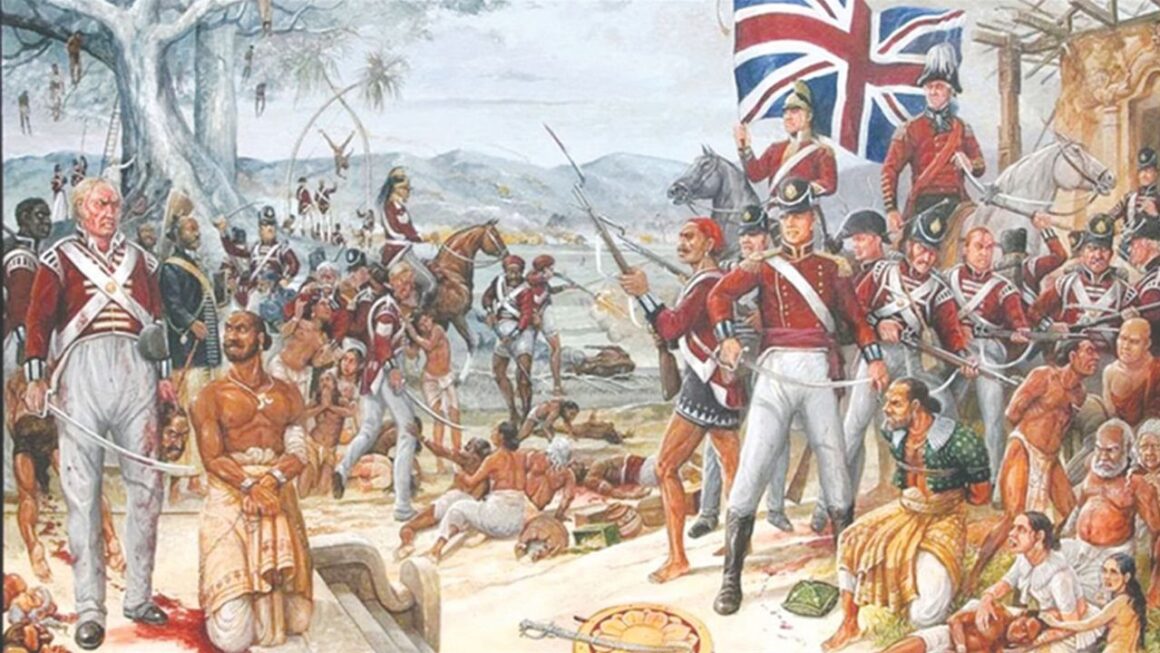
Similarly, in the sub-continent, the crown in the jewel of British Empire, Britons buried the divide and rule seeds. They divided and dissected the region once they left. Then, why are they worried today. They are reaping the plants of the same seeds they planted few decades back. Britons justified their colonialism under the unimaginable guise of White Man’s Burden. Karma is cruel, if it is unwrapped. Slavery, colonialism, plundering and looting of sub-continent, dividing African borders with rulers, and promising lands to Zionist is the result of Karma today. To all Britons, the sun has finally sat in the East!
About the author:

Jahanzaib Mengal
SIT QuettaJahanzaib has done his graduation from Qauid-i-Azam Univeristy Islamabad in International Relations. His field area is International Politics, Indian Ocean, and National Security.