


Introduction: A Voice that Refused to be Silent
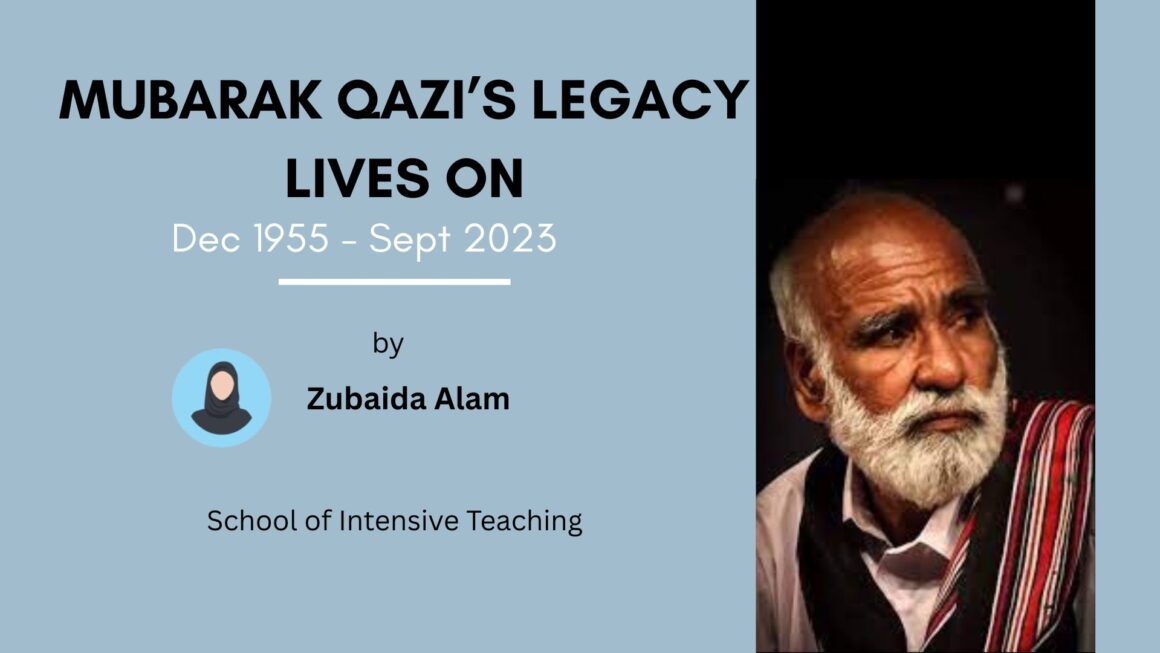
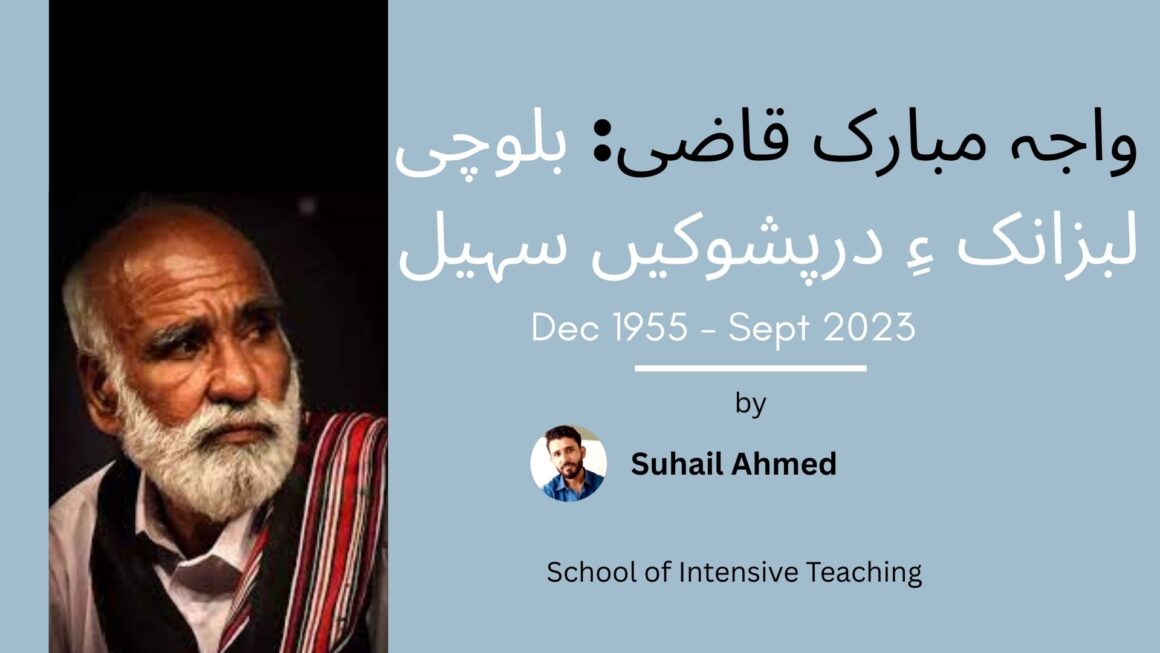
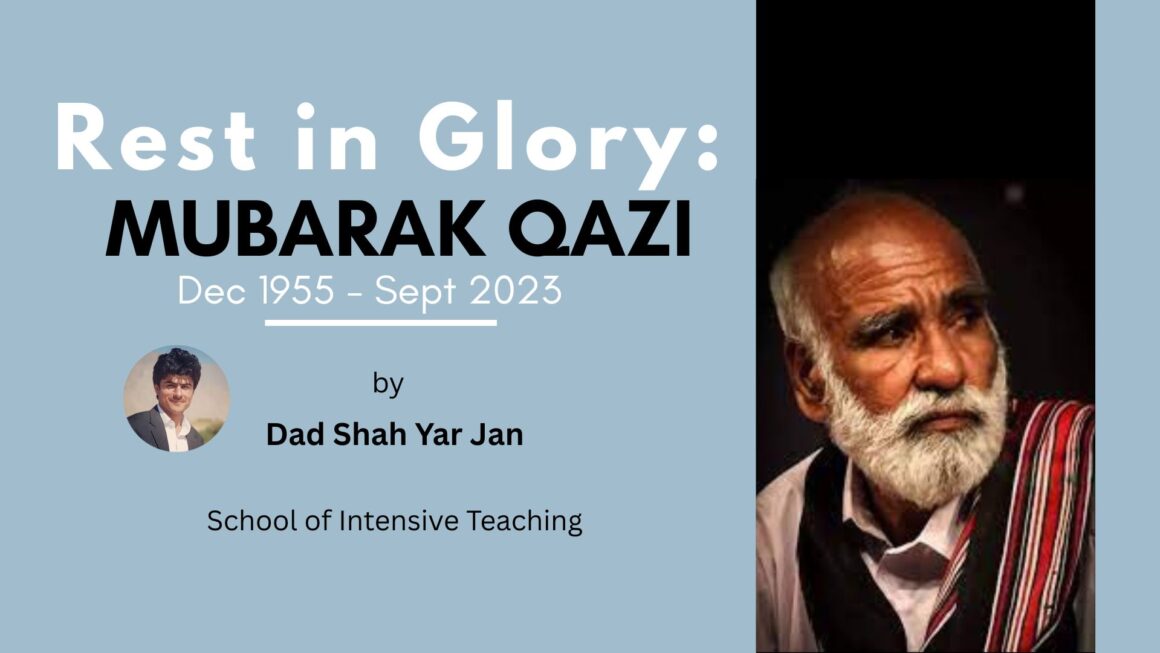
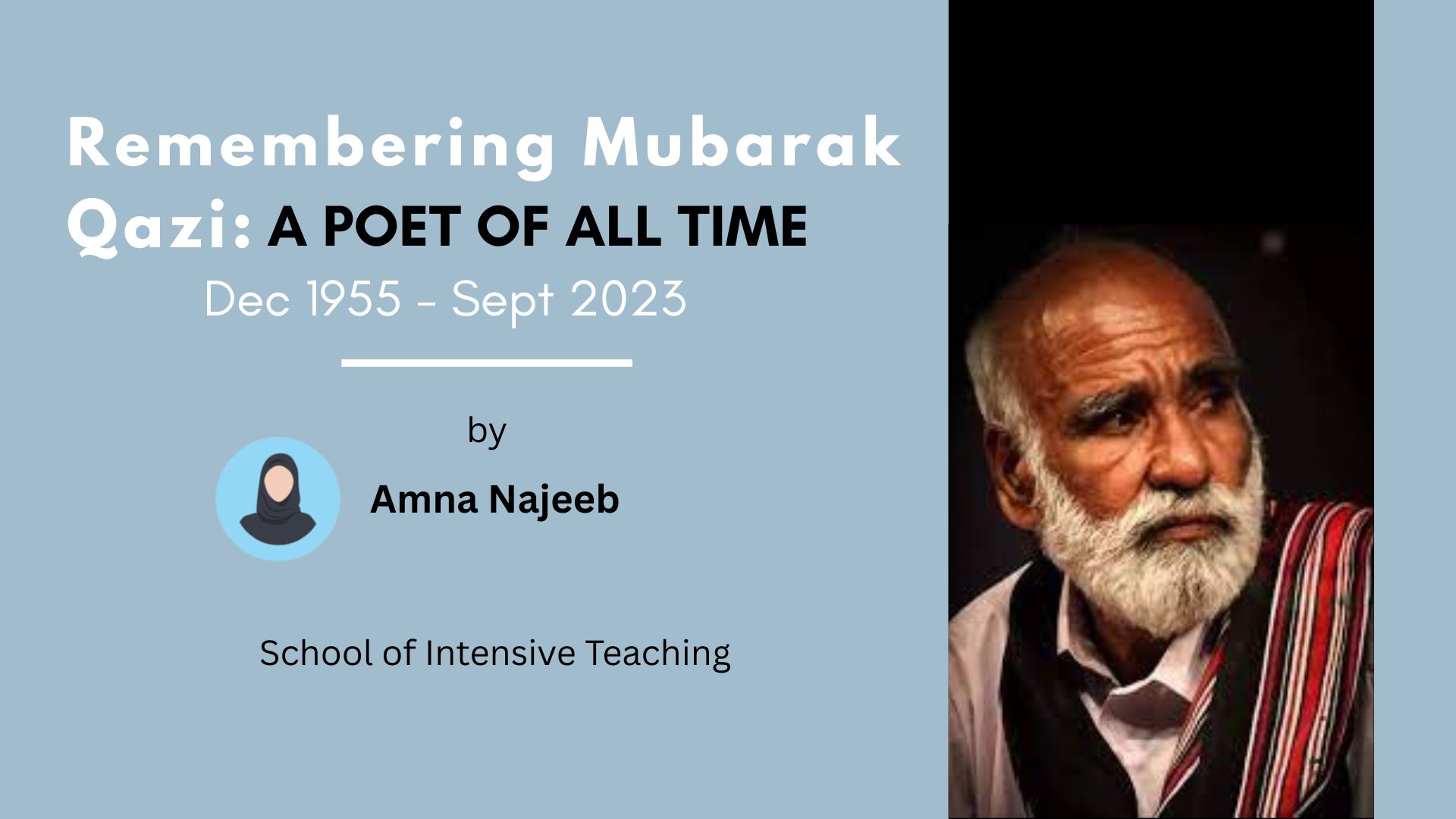
Every nation must have a poet whose words rise above the ordinary; the poet, due to whom, silenced voices were broken in the form of written (قلم). The spirit they had to speak up for their nation and its people is unmatchable. If we talk about Balochistan, Mubarak Qazi was the first poet to dedicate every word to its people, whether it was for pain or struggle.
Early Life:
Mubarak Qazi was born in the coastal town of Pasani in 1955. He watched the hardships of ordinary Baloch families. These experiences shaped his heart, and later he came to know that he had stepped into the field of poetry. It is believed that Qazi was privileged to write about the Baloch nation. He studied in Gawadar and later in Karachi, but his most excellent education came from the pain of his people. By the time he reached his youth, he had already chosen his future and his battlefield. The battlefield of words. He decided to write about his people, love, and the struggle of the motherland.
A Poet whose words were written in blood and ink:
Among all his qualities, the greatest was the courage that he had. Mubarak Qazi’s poetry is remembered for one quality above all: fearlessness. He was a person who was not afraid of power, prison, or even death. While other writers were busy crafting poetry of beauty and love in safe metaphors, Qazi turned his poetry into a weapon of resistance. He wrote about the exploitation and injustice that were openly done to his people. Due to this, he was arrested many times and thrown into prison. Yet the walls of the prison became his classroom, and resistance his lesson.
What love seemed to him
Although Qazi was known as a rebel poet, he was also a poet of love. For him love was never separable from freedom .He believed that one cannot truly love a person if one does not love their land, their culture and their dignity. In his verses, the word beloved was often a symbol of Balochistan itself. To love her was considered to protect her, to fight for her, and to raise his voice for her. In such a way, he turned love into a revolutionary force.
A wound that Never Healed
Mubarak Qazi had only one male child whose name was Kambar Mubarak who died in 2014, a tragedy that left a lasting scar on Qazi’s life. Though he had always embraced prison, torture and even the thought of death without fear, the death of his son broke him in a way nothing could. The pain of losing his only son shattered him. Even after this loss, his family remained a source of emotional strength for him, supporting him quietly as he continued to write and inspire .
The Pen of a Nation: Qazi’s Words
Among Waja Mubarak Qazi’s unforgettable verses are :
Rise again, as rise I must,
And with my voice, so bold and clear,
Speak the truth for all to hear.”
In Balochi:
وطن کہ نیست انت تہ ھچ نہ ما نیت
وطن کہ ھست انت مازندگان، زندگان نمِراں
Without the homeland, there is nothing, no existence.
If there’s a homeland, I am alive—alive, and I won’t die!”
End of an Era:
The revolutionary Balochi poet passed away on 16th September 2023 in Turbat. He was 67 years old and took his last breath at the home of his friend Babu Alam after a long illness. His funeral was held on 17th September 2023 in Pasni and was attended by thousands of mourners.
The Eternal Flame:
He is remembered as the “rebel poet of Balochistan”, but he was much more- he was a teacher, a fighter, a dreamer and a lover. His life and poetry remind us that art has the power to change societies that words can be more sharper than weapons, and that truth, no matter how dangerous, must be always spoken. He may have left this world, but his legacy still burns and continues. He gave his people courage and bravery through his poetry and also proved that one man with a pen can challenge injustice. After his death, now his words are the part of the soul of Balochistan that are echoing in deserts, mountains , and seas.
To write about Mubarak Qazi is not only to honour a poet but also to recognize his legacy, his every word ever written. His verses and poetry will always remind us that poetry is not only about beauty it can be about truth, and sacrifice.
About the author: