




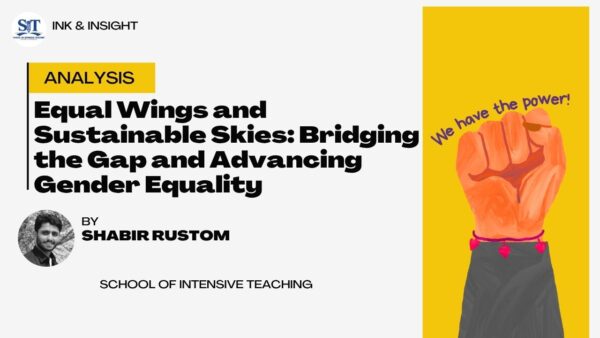
Gender Equality, no doubt, ensures a sustainable future. Women are the sole authority for consistent progress and production in a society. Women do not rely on external sources to shape their future, rather they utilize complete might of themselves when equality is given in society. However, to advance gender equality; the measures of empowering women, eradicating patriarchal frame and engaging young generation on remarkable women examples, ought to be taken.
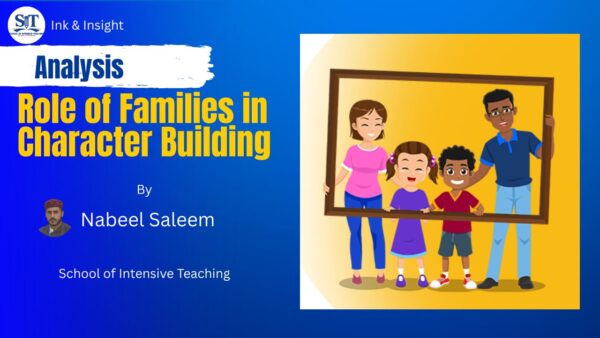
Role of Families in Character Building
Families play significantly a role to build the characters of children. The most crucial role is the environment. If the environment is beneficial, then parents do not need to put in a lot of effort. However, if the society is challenging, parents not only have to take precautions but also need to have much leisure time to watch out for their innocent children. And whatever they are taught would manifest. Families had played a significant role in the behavior and lifestyle of children.
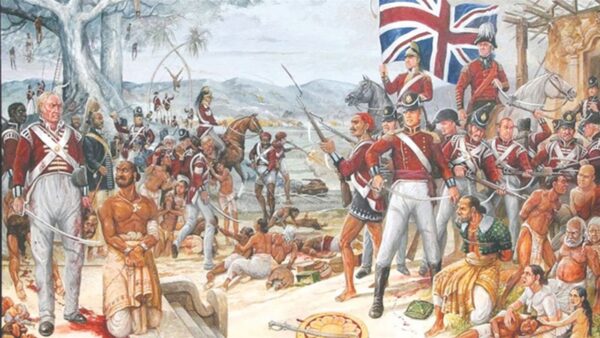
The Goose that Laid the Golden Eggs
As children, we felt a chill of excitement when we heard how Ali Baba, a poor wood-cutter from the forest, found a treasure in a cave full of gold. It gave us goosebumps. Similarly, many other stories had such enticing thrill when the character of the novel or the movie suddenly finds abundant wealth. The story of the Sub-Continent is much similar and gives sequential resemblance. A colonizer, in long search of raw-material and wealth, suddenly finds a goose that lays golden eggs. It, with political and colonial acumen, colonizes the region.
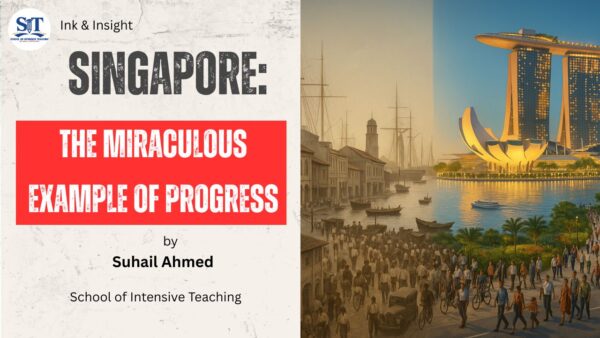
Singapore: The Miraculous Example of Progress
In this contemporary era, Singapore is considered the epitome of progress. It ranks among the top four Asian tigers —South Korea, China, Taiwan, and Singapore —that have achieved miracles in every development field. Similarly, it is among the top four least corrupt countries in the world and the top in Asia for the past decade. Presently, Singapore stands as a society without religious intolerance, ethnic, and linguistic bias. Unfortunately, the scenario of Singapore was not so in the past; behind the glittering curtains of Singapore’s current development was another tarnishing side – a country full of crimes, drug addicts, unemployment, and food scarcity.

In Search for Stability: The New Defence Agreement between Pakistan and Saudi Arabia
It is a geopolitical marriage. Every alliance, in history or in today’s world, carries its own theatre. Some are undoubtedly forged in blood, and others are a matter of necessity. The new defence pact signed on September 17 between Saudi Arabia and Pakistan belongs to the latter: necessity. Many, at the moment, are interpreting it as a geopolitical win for both countries. It is, yet, less a triumphal march than a calculated embrace—two countries embracing each other in one another’s shadow: one for security and the other for economic relief and relevance
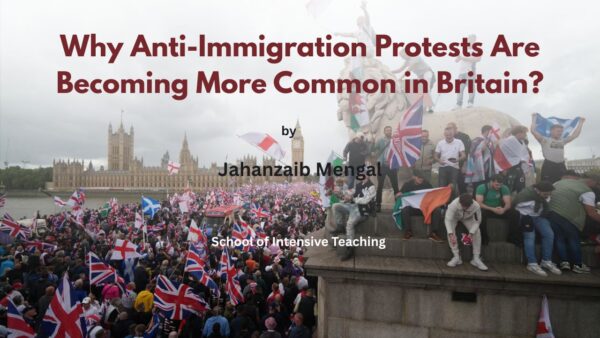
Why Anti-Immigration Protests Are Becoming More Common in Britain?
What makes a crowd of 15,000 chant the slogan of “Stop the boats” in the heart of London? Is it fear, anger, or the echo of a nation struggling to hold on to a sense of itself? The answer is harsher, the sense of losing their identity. This week, London witnessed a wave of anti-immigration protests—unearthing the underlying tensions in Britain. In central London, demonstrators united under the slogan of “Unite the Kingdom”, a call showing the polarizing debate of immigration. Organized and amplified by the far-right activist Tommy Robinson, the protesters divulged the deeper anxieties over migration and Britain’s long-standing relationship with newcomers.
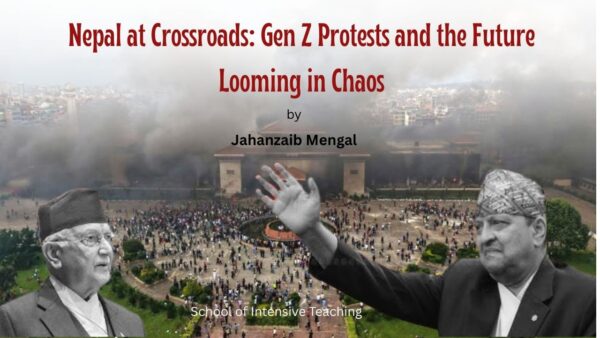
Nepal at Crossroads: Gen Z Protests and the Future Looming in Chaos
“There are decades when nothing happens and there are weeks when decades happen,” wrote Lenin—and Nepal feels like it is living in such a week. Nepal is currently at a crossroads. The PM has resigned from the office and has left his ailing wife behind; later, she was rescued by the protestors. The army chief has announced a curfew in the country and assumed control of the reins of power—at the time of writing. The situation raises some fundamental questions: Is Nepal back to square one?
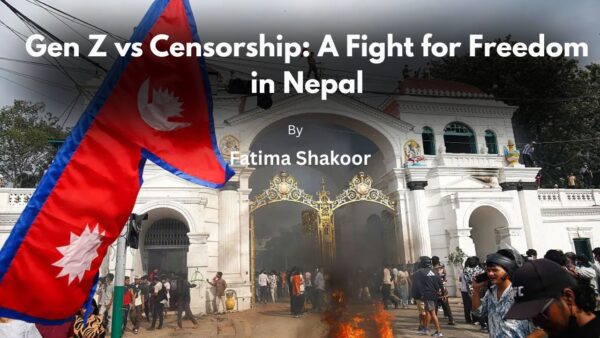
Gen Z vs Censorship: A Fight for Freedom in Nepal
On September 8, 2025, Kathmandu woke up restless with a sudden ban on social media and tighter censorship which ultimately lit the spark, but what really spilled young people into the streets ran much deeper. They spoke of their freedom of speech being strangled, but also of the weight they had carried for years—corruption, joblessness, ministers hiring their own, a government deaf to its own people. Most were standing shoulder to shoulder in their twenties some even younger, angry but determined.

Knowledge is Power
Knowledge is power. It empowers humans to drive innovation, discovery, and creativity. It assists us in discovering something, such as a peninsula, and so on. Innovation is the result of applying knowledge for the purpose of solving a problem. Humans have a long history and a rich tradition of innovation. These innovations are the result of knowledge, which may not be possible without knowledge.
Democratic Consolidation in Pakistan: A Distant Reality
Democracy promises freedom, justice, and equality — yet in Pakistan, these ideals remain distant. Despite regular elections and constitutional guarantees, questions persist: Are our polls truly free and fair? Do citizens enjoy genuine freedom of speech? Does justice serve all equally? Allegations of vote-rigging, dynastic politics, elite manipulation, and corruption scandals continue to weaken public trust. Instead of strengthening institutions, political interference and power struggles keep democracy hostage. Until transparency, accountability, and electoral fairness are ensured, democratic consolidation in Pakistan will remain more of a dream than a reality.