





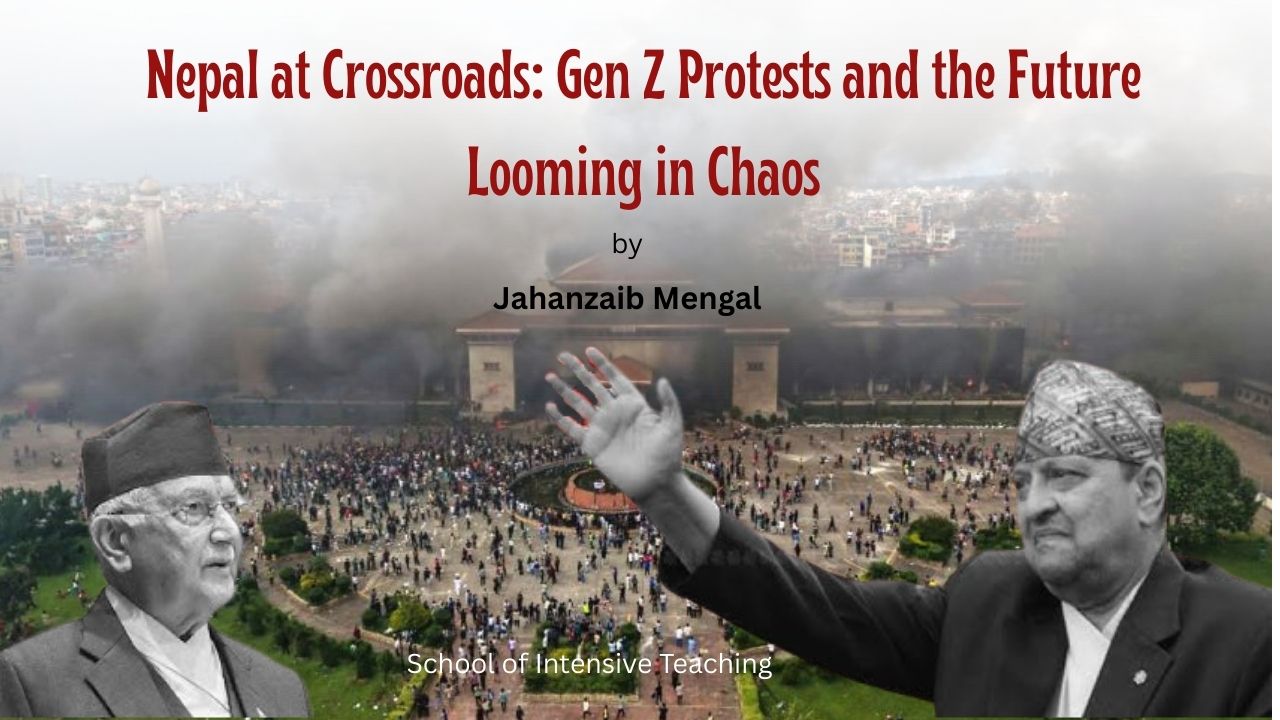
“There are decades when nothing happens and there are weeks when decades happen,” wrote Lenin—and Nepal feels like it is living in such a week. Nepal is currently at a crossroads. The PM has resigned from the office and has left his ailing wife behind; later, she was rescued by the protestors. The army chief has announced a curfew in the country and assumed control of the reins of power—at the time of writing. The situation raises some fundamental questions: Is Nepal back to square one? Has the Gen Z protest been unsuccessful in achieving its goals? What triggered the inferno, and what was the social media ban that led to protests in the country? Do all revolutions fail, and will Nepal be another case study of a failed revolution studied in history classes? Currently, it is a fallacy to imagine the proper course of events. Still, history can provide some illuminating understanding until Nepal’s future hangs by a delicate thread.
The Spark?
Say it with the derisive laugh. It all began with a flicker—a ban on 26 social media platforms. A flicker that torched dry tinder and set the nation ablaze. In the smoke, three shadows lurked large and gloomy: despotism, corruption, and nepotism. As the smoke billowed higher, climbing up in the sky, Nepal found itself staring into the abyss. Ashes of promises scattered across the streets, the flames licking at the edges of power, and the waves pounding against the fragile seawall of authority, ripping and engulfing everything that came in its way: politician houses, luxurious hotels, and the Prime Minister. The ultimate cause that triggered the deluge has evolved into a tsunami, only stopping once it wrecks everything in its path.
“We are living through one of the most revolutionary ages in history.”
Gen Z refused to be swindled by the shoddy, played-out narratives that have hitherto sustained the status quo of despotism, corruption, and the bleeding dry of democracy. Gen Z has witnessed the undemocratic practices trampling on the soaring ideals of the Constitution, as well as the government’s dilatory response to rising unemployment and living costs. The cracks have been developing over the years, only to break the walls of the dam on September 9. And, in an instant, people were in streets. The stage is set and the actors unwilling to leave.
A Déjà vu?
We have been here before—oh, we have seen it before, not in Nepal, but in Sri Lanka and Bangladesh. Call it an avalanche being triggered by a single pebble: first in Sri Lanka, then in Bangladesh, and now, in Nepal. But the winds of change and uproar have been rattling the old windows of these empires. The power brokers in these states have failed to predict the calm before the inevitable downpour—ultimately being swept away by the flood.
Sri Lanka encountered mass protests that were triggered by the gradual decline of life brought on by harsh economic upheavals after the country tasted a sovereign default in 2022. The economic pains included hiking inflation, mass unemployment, and shortage of accessible foods. Similarly, in Bangladesh, the immediate trigger was the sudden announcement of government jobs quotas that hurdled the stone for the avalanche. This issue had been brewing for years, as Sheikh Hasina has been awarding these job quotas to party loyalists to consolidate her power. Likewise, in Nepal, the lightning struck when the government shut down some social media sites.
How are the three similar?
There is much in common between these three recent uprisings. The environment in the three states resembled an overgrown forest cluttered with kindling and parched by drought—all it took was a spark—to set them afire. The uprisings were led by ordinary youth without any party affiliations but dissatisfied by government performance. No party buses or heavily armed men brought the people, nor did the protesters have a leader at the helm. They were a loosely knit group of students who gathered through social media. Yet, they endured and resisted. How did such a large crowd gather with the trigger of the event?
All had preliminary reasons that created a bond among the arsonists that was stronger to break: disaffection with the material conditions of life imposed by the state, rising purchasing power, loss of trust in institutions, inflation, and embezzlement of public funds. Drying the government body drop by drop—until it stopped bleeding. These reasons set the perfect stage for the storm, and the crowd gathered instantly without hesitation to protest and tear everything apart.
Future Looming in Chaos?
Everything is uncertain until the dust settles. Currently, a former chief justice has agreed to form an interim government. Nepal is walking on the same rope that Bangladesh once walked. The protestors, Gen Z, demanded the reins of power be handed over to a former chief justice, not any politician. Some self-purported journalists on YouTube have already aired their crispy and masala-filled gossip on Nepal as being concocted by the CIA. Hope they are proved wrong, and sanity prevails in the end.
There is much uncertainty over who will lead in the future. If the citizens had lost faith and trust in the politicians, would there be elections soon? Nepal must navigate the murky waters and pave the way for future governments with greater transparency and efficiency. If the rust has gathered and jammed the wheels, it must be washed off. Otherwise, it will be back to square one, as France descended into chaos after the bloody revolution in 1789 and adopted fifteen constitutions, governed by three monarchies, two empires, five republics, and a quasi-fascist regime, swinging back and forth like a pendulum.
Lessons to Learn:
The ground is fertile here, and the analysts have smelled blood not far away. The causes that triggered the inferno in the three countries are no different from the realities in Pakistan: all are facing these issues. So, it lacks the will? It does not, to some extent, as evidenced by the recent uprising against a female university student, who is quoted as an example. Within days, the streets were filled. If history is a guide book, the 2007 protests and ultimate fall of the then President buttress the fact that crowds and mass protests can bring change. Lessons must be learned and steps be taken to ensure economic shocks and IMF bailout packages do not hurt the public. Employment opportunities and meritocracy are the priorities. More transparency and civil service reforms should be taken to plaster over the cracks.
About the author:

Jahanzaib Mengal
Inspector of PoliceJahanzaib has done his graduation from Qauid-i-Azam Univeristy Islamabad in International Relations. His field area is International Politics, Indian Ocean, and National Security. He is currently serving as Inspector of Police in Homes & Tribal Affairs Department Balochistan.